
The AI Content Explosion Is Creating a Human Authenticity Crisis
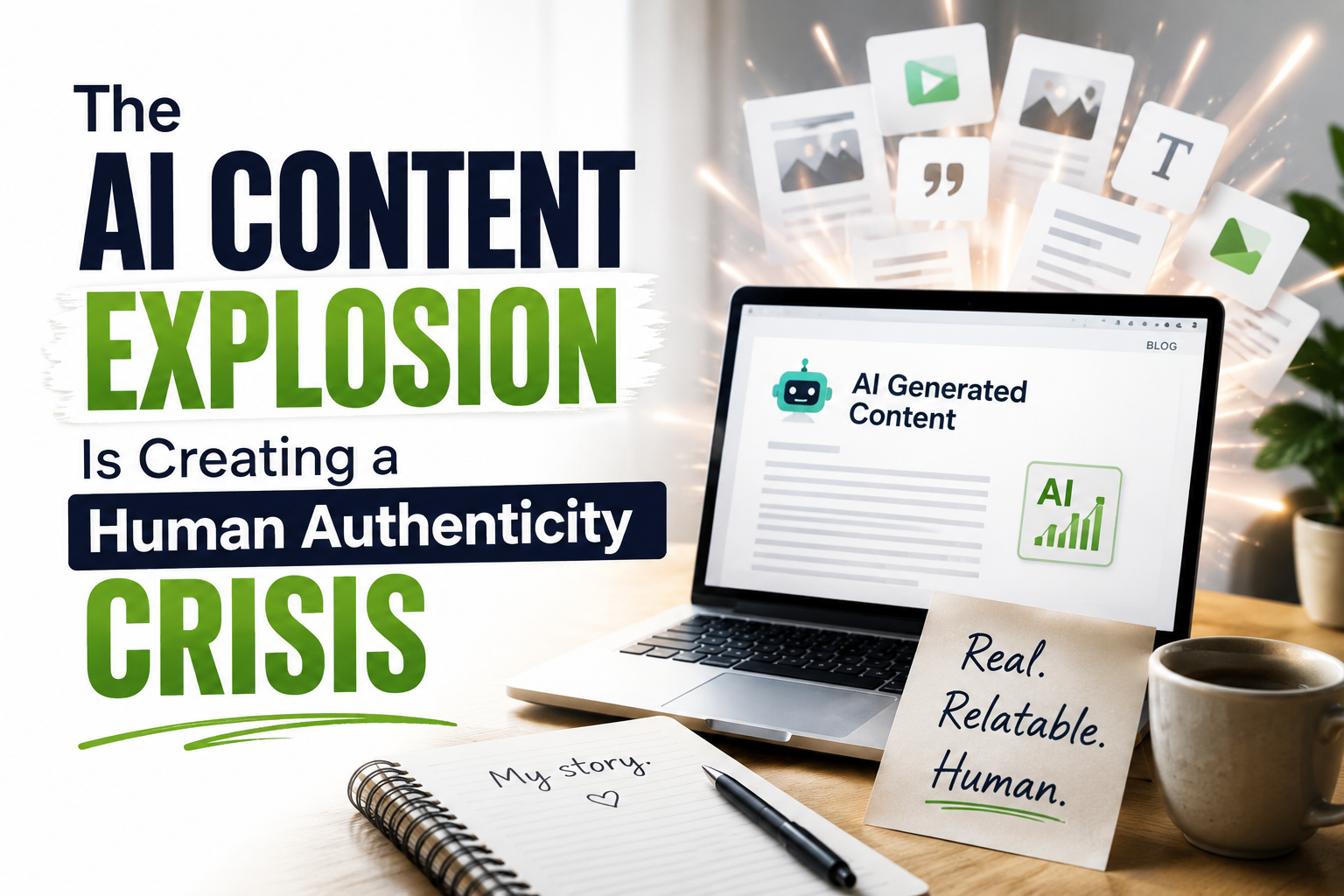
The Internet Has Started Feeling Strange
Everything sounds intelligent now. Every caption is polished. Every blog is optimised. Every brand suddenly has “insights.” Every founder sounds like a motivational keynote speaker.
And yet, somehow, the internet feels less human than ever before.
Scroll LinkedIn for ten minutes, and you’ll see it. The same storytelling structures, the same “game-changing” language, the same emotionally engineered vulnerability, the same recycled optimism wrapped in corporate confidence.
Different industries. Different creators. Same emotional aftertaste. That is not a coincidence.
We are currently witnessing one of the biggest communication shifts in modern digital history. AI tools have democratised content creation at a scale nobody fully anticipated. What once took agencies, writers, strategists, and creative teams weeks can now be generated within minutes.
On paper, that sounds revolutionary. In reality, it is creating something far more complicated. While artificial intelligence is helping brands produce more communication than ever before, it is also triggering a growing human authenticity crisis online. And honestly, most businesses still do not realise how serious this shift is becoming. This is no longer just about AI-generated blogs or automated social media captions.
This is about trust. Attention. Identity. Emotional credibility. And the future of brand communication itself.
We are entering what many strategists quietly describe as the Post-AI Trust Economy. An era where authentic human communication is becoming increasingly rare and therefore increasingly valuable. The brands that understand this shift early will build long-term loyalty.
The rest may slowly disappear into digital sameness.
The Great Content Explosion Is Already Here
Every single day, millions of AI-assisted pieces of content go live online.
Blogs. Scripts. Emails. Product descriptions. SEO pages. Ads. LinkedIn posts. Social captions. Brand manifestos. The volume is staggering.
Initially, businesses celebrated the efficiency. Content production became faster. Marketing costs dropped. Publishing scaled aggressively. Then another problem emerged quietly in the background.
Synthetic Sameness.
This happens when brands rely so heavily on AI-generated communication patterns that everything begins sounding emotionally interchangeable. The outcome is everywhere now. Content that is:
- Technically correct
- Grammatically perfect
- Strategically optimised
- Emotionally hollow
It reads smoothly. But it rarely leaves an emotional imprint. And audiences are beginning to notice.
Why People Can “Feel” AI Content Instantly
Most consumers cannot always identify AI-written content technically. Emotionally, though? They absolutely can.
Humans instinctively respond to emotional texture. We notice subtle signs of lived experience, specificity, contradiction, humour, vulnerability, and imperfect humanity in communication. AI-generated content often struggles to replicate that naturally. That is why so much online content today feels strangely weightless.
It says all the right things. But says them too cleanly. Too safely. Too predictably. The result is what many branding strategists now call Algorithmic Emotional Flattening.
Communication loses texture. Every brand starts sounding emotionally calibrated instead of emotionally real. You’ve probably seen examples already:
- LinkedIn thought leadership posts, following identical storytelling formulas
- Startup websites using interchangeable innovation jargon
- AI-generated SEO blogs repeating surface-level insights
- Brands suddenly speaking like wellness therapists
- Artificial vulnerability crafted purely for engagement
Ironically, the more brands attempt to sound “human” through AI-generated emotional language, the less believable they often become. This contradiction sits at the centre of today’s authenticity crisis.
The Authenticity Premium Is Rising Fast
Here’s where things become strategically fascinating. As synthetic communication floods the internet, genuine human authenticity becomes scarcer. And scarcity creates value. This creates what modern marketers increasingly recognise as the Authenticity Premium. Consumers today reward brands that feel:
- Emotionally believable
- Culturally aware
- Honest
- Distinctive
- Transparent
- Human-led
As AI-generated content becomes easier to produce, authenticity has become harder to replicate. The comparison below highlights why brands that balance AI efficiency with genuine human perspective are earning greater trust and long-term loyalty.
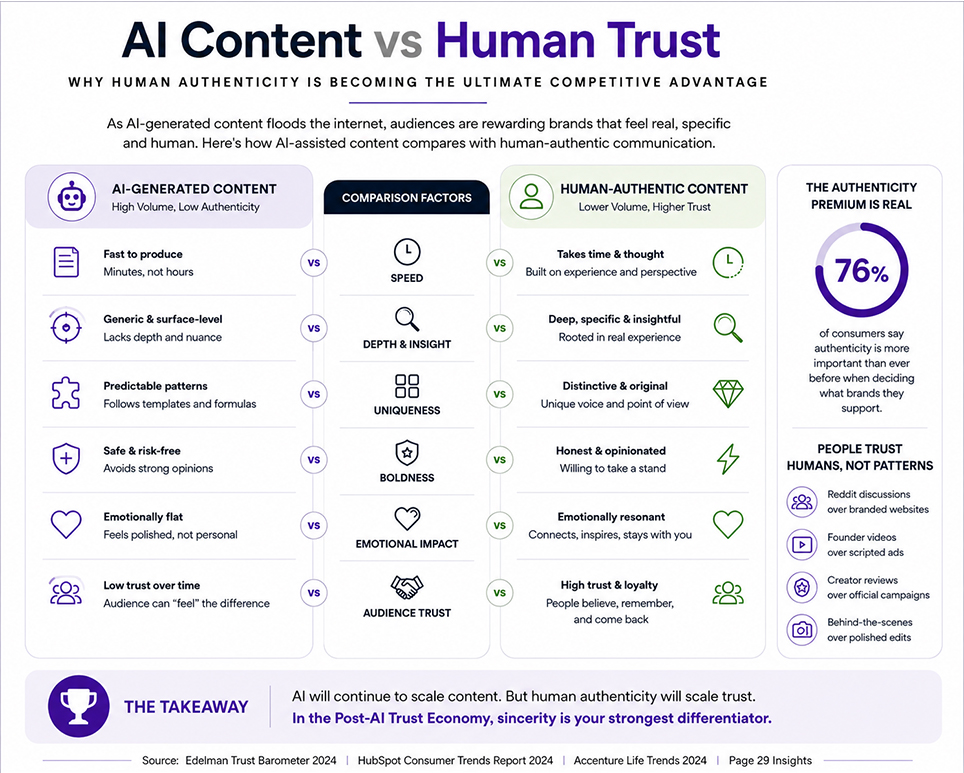
This explains why raw creator videos frequently outperform expensive, polished campaigns. It also explains why audiences increasingly trust:
- Reddit discussions over branded websites
- Founder videos over-scripted advertisements
- Creator reviews over official campaigns
- Behind-the-scenes footage over polished marketing edits
In many ways, people are no longer just searching for information online. They are searching for sincerity. That changes branding entirely.
AI Is Not the Problem. Emotional Interchangeability Is.
There’s an important distinction businesses need to understand. AI itself is not destroying creativity. Emotionally interchangeable communication is. The smartest brands today are not rejecting AI. They are using it intelligently while protecting the human layers that technology still cannot replicate properly.
AI is extremely effective for workflow acceleration, content structuring, data summarisation, research support, SEO optimisation, production scaling and creative iteration
However, AI still struggles with:
- Emotional timing
- Cultural nuance
- Lived experience
- Instinct
- Subtle humour
- Contradiction
- Taste
- Emotional restraint
- Human perspective
In simple terms, AI can replicate communication patterns. But it still cannot authentically replicate emotional truth. And audiences can sense that difference remarkably fast.
Why Perfect Content Is Quietly Losing Power
For years, marketing teams chased perfection. Perfect grammar. Perfect formatting. Perfect optimisation. Perfect brand-safe communication. Then AI made perfection infinitely scalable. And once perfection became common, it stopped feeling special. In fact, overly polished communication now often triggers suspicion. Especially among younger audiences.
Gen Z consumers grew up surrounded by digital performance. They understand online behaviour instinctively. They can immediately detect when brands are trying too hard to sound relatable, self-aware, or emotionally intelligent.
That is why some of today’s most effective content feels intentionally human:
- Conversational
- Slightly imperfect
- Emotionally honest
- Culturally grounded
- Oddly specific
- Less corporate
People connect with emotional honesty more deeply than technical polish. Always have. Probably always will.
Brands Are Quietly Losing Their Distinctive Voices
One of the biggest casualties of AI-assisted content creation is brand differentiation. Without strong creative direction, AI naturally pushes communication toward median language patterns. Which means:
- Startups begin sounding identical
- Luxury brands lose tonal uniqueness
- Agencies mimic each other unconsciously
- Founders sound algorithmically filtered
- Thought leadership becomes templated
This is creating what many strategists now recognise as Brand Voice Collapse. And honestly, the damage is bigger than most companies realise. Because brand voice is not just writing style. It is identity.
A real brand voice carries emotional rhythm, cultural awareness, tonal confidence, strategic positioning, personality, perspective and behavioural consistency. Templates cannot create that. Only human-led strategic thinking can.
The Internet Is Entering a Trust Recession
This may be the most important shift of all. Audiences are beginning to question nearly everything online.
- Is this review genuine?
- Did the founder actually write this?
- Does this brand truly believe what it says?
- Is this insight original or AI-generated?
- Is this storytelling or performance?
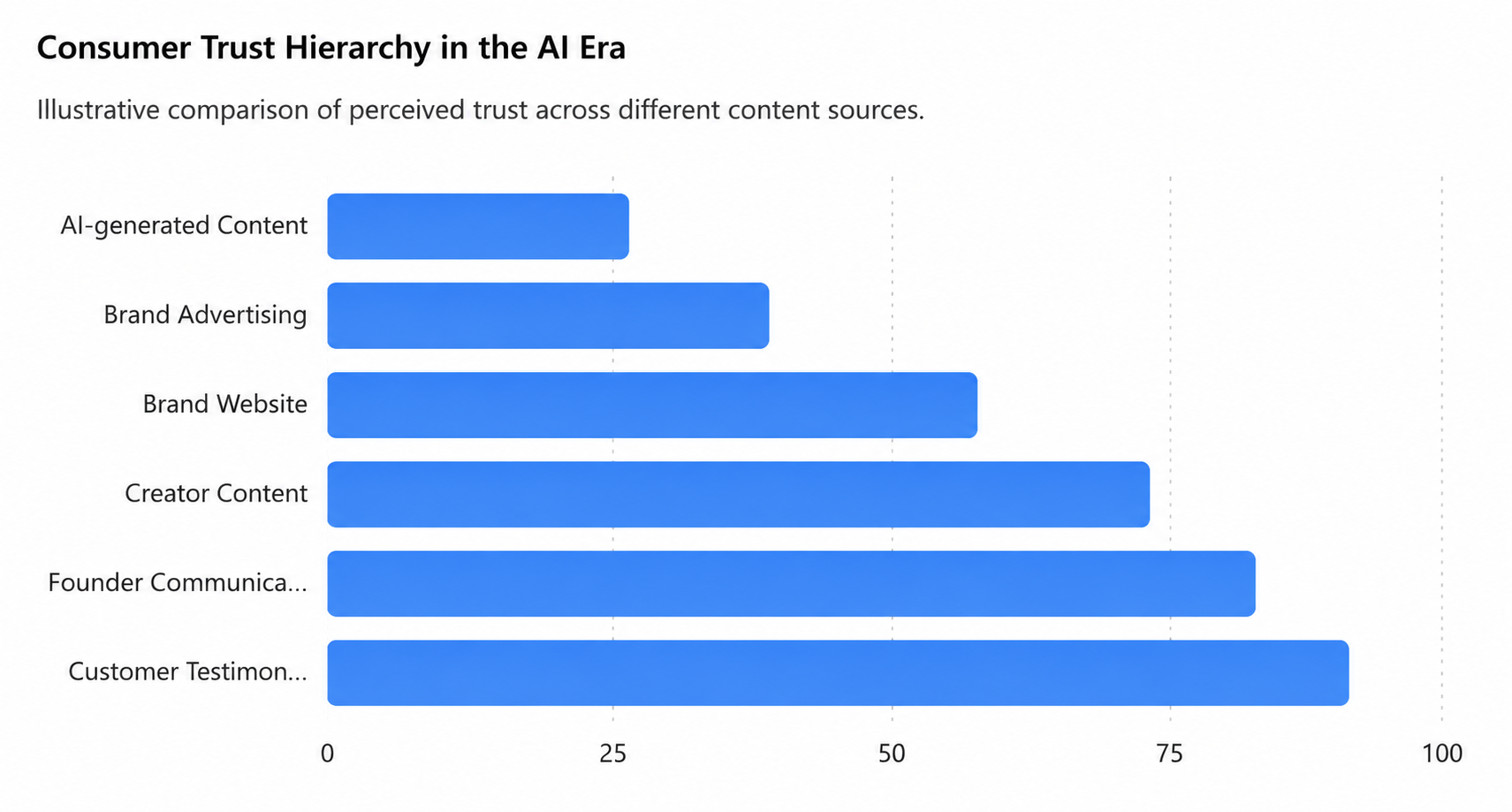
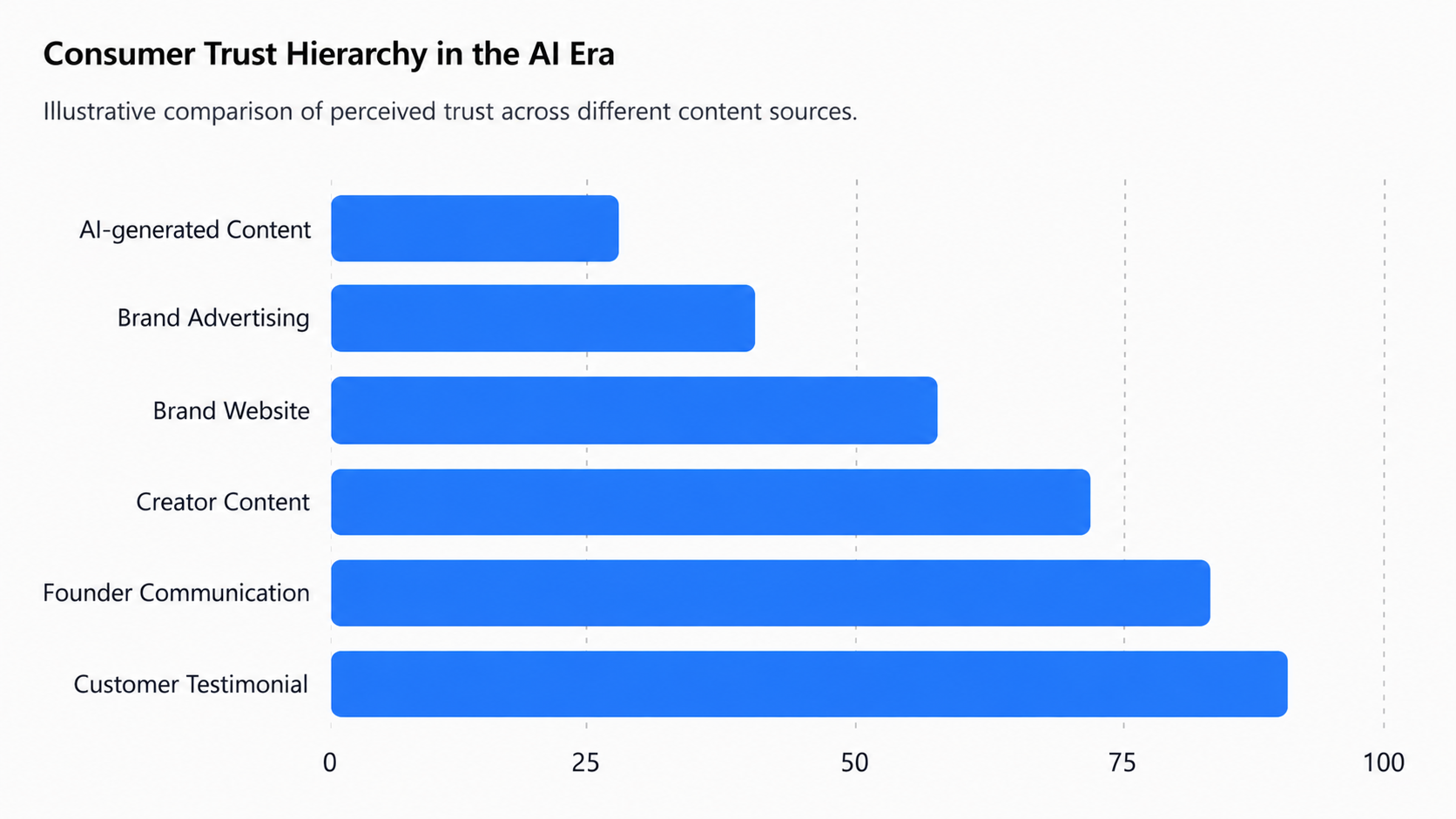
We are witnessing the early stages of a digital trust recession. And trust, once damaged, becomes incredibly expensive to rebuild. Ironically, many brands using AI to sound more human are becoming less believable than ever before. That is the paradox shaping modern communication. The issue is no longer low-quality content. The issue is emotionally interchangeable content.
SEO Is Becoming More Human Again
One of the most overlooked consequences of the AI content explosion is the evolution of search itself. Google’s systems increasingly reward:
- Original insights
- Expert-led content
- Experience-driven writing
- Audience value
- Topical authority
- Trustworthy communication
Why? Because search engines are trying to protect users from endless waves of low-value AI-generated spam. And honestly, users want that shift too. People are exhausted by reading fifty blogs that all say the exact same thing in slightly different ways.
They want perspective, specificity, depth, credibility, strategic insight and human expertise. The future of SEO will not belong to brands producing the highest volume of content. It will belong to brands producing the highest quality of trust. That distinction matters enormously.
Signs Your Brand Content Sounds AI-Generated
Many brands unknowingly publish content that immediately feels synthetic. Here are some common signs:
- Emotionally vague language
- Repetitive motivational phrasing
- Excessive polish
- Generic hooks
- Interchangeable storytelling
- Lack of specificity
- Surface-level insights
- Artificial relatability
- Zero cultural texture
- Perfectly symmetrical writing rhythm
The biggest giveaway? Content that sounds technically correct but emotionally forgettable. People may not consciously identify it as AI-generated. But subconsciously, they disengage from it very quickly.
Human-Led Storytelling Is Becoming a Competitive Advantage
The future of branding will not belong to the loudest brands. It will belong to the most emotionally credible ones. That means storytelling itself is evolving. Old-school marketing asked, “How do we capture attention?” Modern branding asks, “How do we build emotional trust consistently?” Huge difference. Today’s audiences want stories that feel lived instead of manufactured. They respond to:
- Founder honesty
- Operational realities
- Nuanced emotion
- Customer experiences
- Vulnerability with substance
- Culturally aware communication
- Genuine perspective
Not recycled inspiration. Not corporate optimism generated from prompts. Not emotionally engineered relatability. The brands that thrive over the next decade will be the ones willing to sound human again. Even when the internet keeps becoming more synthetic.
The Dangerous Rise of Synthetic Personality
Another major issue is emerging across modern branding. Synthetic personality. This happens when brands attempt to artificially manufacture relatability through AI-generated emotional behaviour. You’ve probably seen it already.
Every brand suddenly sounds obsessed, grateful, humbled, deeply passionate, or emotionally awakened. The emotional exaggeration becomes exhausting after a while. Because authenticity is not about sounding emotional. It is about being emotionally believable. And audiences today have very low tolerance for performative branding. Real authenticity cannot be prompt-engineered. It must emerge from consistent behaviour, customer experience, leadership clarity, strategic honesty, operational reality, and cultural understanding. Without these foundations, emotional branding quickly feels artificial.
So What Does the Future Actually Look Like?
The future is not humans versus AI. That conversation is already outdated. The real future is hybrid intelligence. Human creativity. AI acceleration. Strategic collaboration. The brands that succeed will:
- Automate production intelligently
- Preserve human depth
- Prioritise emotional intelligence
- Build trust-first communication
- Protect distinctive voices
- Create culturally relevant storytelling
- Invest in thought leadership
- Focus on emotional resonance over content volume
Because in a world overflowing with synthetic communication, humanity itself becomes differentiation. And honestly, that may become the single most valuable branding asset of the next decade.
How Brands Can Stay Authentic in the AI Era
Here are practical ways businesses can protect authenticity while still using AI effectively.
1. Build a Strong Brand Voice System
Every serious brand now needs clearly documented communication principles. This should include tone, emotional language, audience psychology, cultural positioning, sentence rhythm, messaging boundaries and storytelling style. Without these, AI-generated communication quickly becomes generic.
2. Use AI for Efficiency, Not Emotional Identity
AI should support execution. It should never fully replace strategic thinking, emotional nuance, or creative instinct. Human refinement remains essential.
3. Prioritise Specific Experiences
Specificity creates trust. Use customer stories, founder perspectives, operational lessons, failures, behind-the-scenes realities and lived insights. Real details create emotional credibility instantly.
4. Invest in Original Thought Leadership
The internet does not need more recycled information. It needs clearer perspectives. Brands that develop original strategic thinking will dominate trust-building over the next decade.
5. Stop Chasing Endless Content Volume
More content no longer guarantees stronger branding. Depth increasingly outperforms scale. One meaningful article can build more trust than fifty generic SEO blogs combined.
Where Page 29 Fits Into This Shift
At Page 29, we understand something many agencies still underestimate. The future of branding will not be won through louder communication alone. It will be won through believable communication. Today’s audiences buy far more than products or services. They buy trust, emotional resonance, cultural relevance, narrative clarity, identity alignment, and strategic credibility. That requires more than automation.
It requires human-centred storytelling, emotional intelligence, audience psychology, strategic positioning, and creative instinct rooted in real human behaviour.
At Page 29, we help brands:
- Build emotionally intelligent identities
- Develop trust-first communication systems
- Create culturally relevant storytelling
- Strengthen brand distinctiveness
- Craft SEO-led human content
- Build long-term audience trust
- Preserve authenticity in an increasingly automated world
Because while AI can generate infinite communication, meaningful brand resonance still requires human insight. And in the years ahead, that difference will separate memorable brands from forgettable ones.
Final Thoughts
The AI content explosion is not slowing down. If anything, we are only seeing the beginning. Soon, digital platforms will contain more synthetic communication than ever before in history. More content. More automation. More optimisation. More noise. But beneath all that noise, something surprisingly human is happening quietly.
People are beginning to crave sincerity again. Not perfection. Not performance. Not algorithmically engineered relatability. Just communication that feels emotionally real.
The brands that recognise this shift early will build stronger trust, deeper loyalty, and more meaningful cultural relevance over time. Meanwhile, brands that continue flooding the internet with emotionally empty communication may gain temporary visibility, but they will struggle to build a lasting emotional connection. Because eventually, audiences stop listening when everything starts sounding machine-made. And perhaps that is the biggest irony of the AI era. The more artificial communication grows, the more valuable authentic humanity becomes.
In the coming years, the rarest thing online may no longer be information. It may simply be sincerity.